OUR SPECIALITIES

You may open pages with specific information about our specialties by clicking on one of the topics listed below.
Cyclone-rated designs
Earthquake-rated designs
Over-water building designs
Foundation engineering
Space frame structures
Wheelchair friendly
Rainwater harvesting (not longer available. Discontinued)
Prefabricating without any nails used
Designed for easy reassembly by yourself
In-house developed user-friendly interactive price list
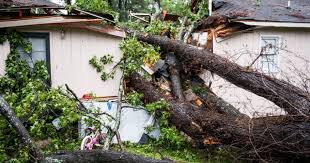
Wind loads during a cyclone (hurricane or typhoon) can be extremely powerful and destructive, particularly for wooden houses. Prefabricated wooden houses are particularly sensitive to unbalanced forces, and it is therefore essential that wooden prefab houses be designed in accordance with the appropriate codes and standards when they are to be built in cyclone-prone areas.
Based on the 40 years of experience of our Senior Technical Advisor, we ensure that the appropriate codes and standards are applied to your Prefab Bali House. We apply the relevant U.S. codes and regulations, including the IBC 2018, together with any applicable amendments in force in the county where the unit will be built. Many other countries also recognize or refer to the IBC 2018.
Where necessary, our designs can be upgraded to meet specific cyclone-rating requirements, subject to a variation order covering the additional cost of reinforcing the standard structure.
Recent scientific studies indicate that hurricane and typhoon wind forces may increase considerably during the coming decades due to global warming. Consequently, and in accordance with these scientific predictions, we have arbitrarily increased the standard IBC wind loads by 10% as an additional safety factor.
The standard construction of our houses is based on a generally high wind-load specification. However, the construction will be modified according to the results of our structural analysis, including the additional 10% increase, when the house is to be built in a hurricane- or cyclone-prone area.
Log on to < hurricanes & typhoons >to read the featured article.
Earthquake rated designs
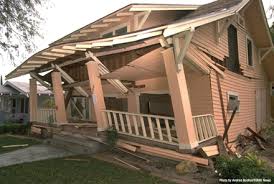
AXIOM: A properly designed wooden structure can provide significant advantages in earthquake resistance compared with many other types of structures, including brick, concrete, and steel.
Earthquakes can have a relatively minor impact on a properly designed wooden building because of its flexibility, particularly when the ground motion is limited. The seismic response of a wooden building can differ considerably from that of a concrete or steel structure.
NOTE: The house shown here is not one of our structures. It is shown only to demonstrate the flexibility of a wooden house.
The structural codes and regulations applicable to countries or regions that may be affected by earthquakes, such as Japan, Indonesia, California, Hawaii, Mexico, Turkey, parts of the Caribbean, the Pacific region, and other areas, require the structure to be evaluated in relation to its natural frequency—the number of vibrations per second—and compared with the frequency content of the ground motion.
If the dominant frequencies of the ground motion are close to the building's natural frequency, the building may experience a significantly increased structural response and potentially greater damage.
Here, the characteristics of wood can play an important role. The natural frequency and dynamic characteristics of a wooden building can differ significantly from those of heavier structures. However, as is always the case, there are limits.
Economically, it would generally not be practical to design a wooden house to withstand an earthquake exceeding a very high seismic intensity. Such a design may be technically possible, but the associated construction costs could become excessive.
Click < here > for the featured article.
NOTE: The house shown at the right above is not one of our structures but it shows the flexibility of a wooden house.
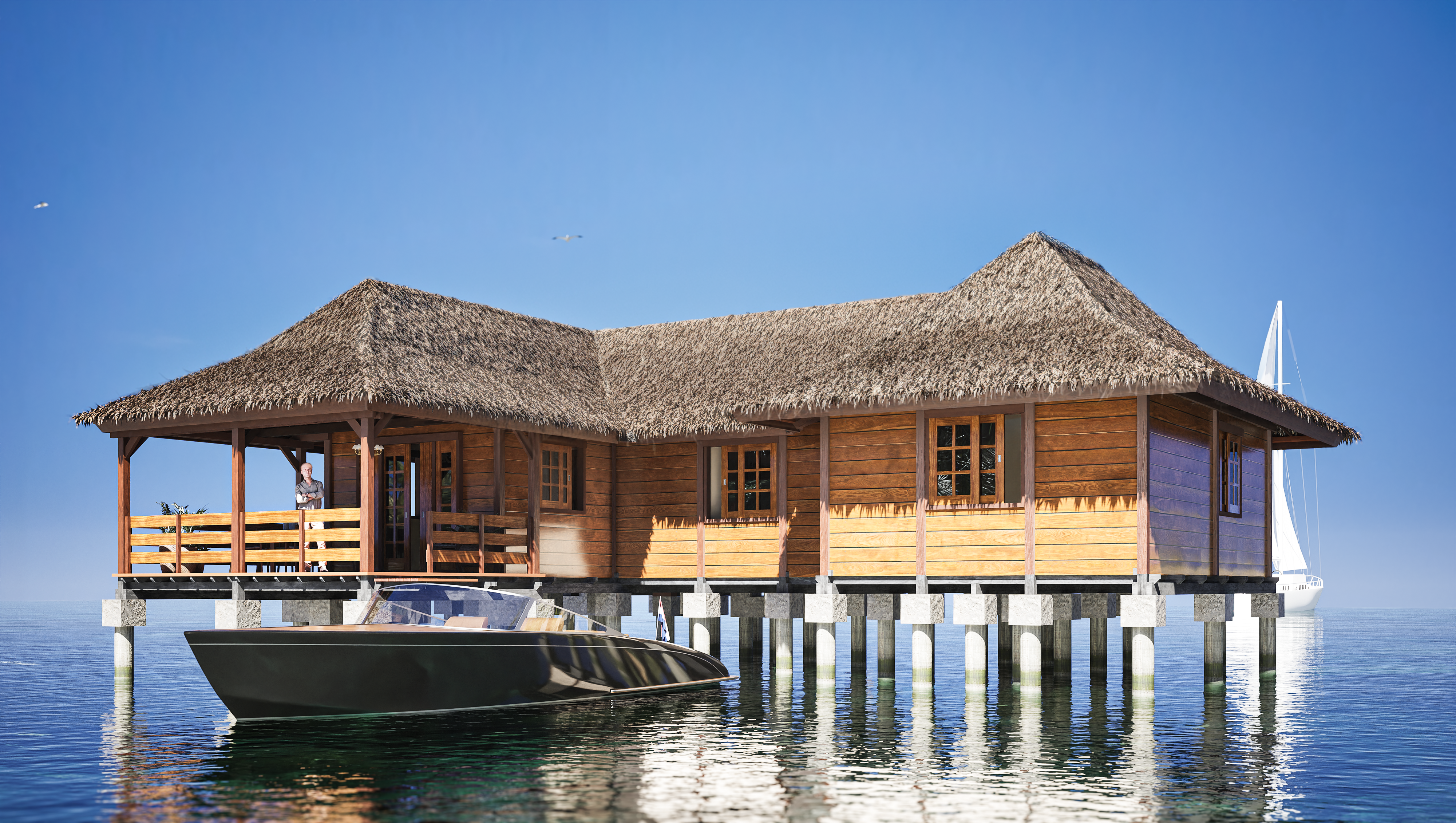 Over-water buildings cannot simply be compared with buildings constructed on land, since the complexity of over-water structures is considerably greater.
In many cases, over-water structures are built on piles driven into the seabed, with the tops of the piles connected by capping beams. The required piling depth is crucial and must be properly designed according to the characteristics of the underlying soil or seabed materials.
Our senior in-house Civil, Hydraulic and Geotechnical Engineer has 50 years of international experience, particularly in over-water building techniques. He can advise you on the required pile type, piling depth, and superstructure.
To safely determine pile capacities, it is necessary to take into account the pile's end-bearing capacity, together with the negative or positive friction acting along the pile shaft. These factors help determine the required and safe pile-driving depth.
Waves normally have only a limited effect on the structural capacity of piles; however, it is necessary to investigate whether wave run-up caused by cyclones requires special treatment.
You may read the detailed article < here >
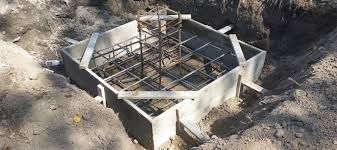
Our Geotechnical Engineer will be happy to advise you on the appropriate type of foundation, whether this involves a shallow foundation, piled foundation, retaining-wall foundation, foundation on a slope, foundation on weak soil, or another type of foundation.
Our foundations are also designed and verified for uplift forces caused by cyclone winds when a unit is to be built in a cyclone-prone area.
For complicated projects, our engineer may request a soil-investigation report, together with SPT graphs, bore logs, and/or laboratory test results.
We will provide a set of foundation drawings showing footing locations, construction details, reinforcement drawings, and the type and number of special Simpson anchors to be installed.
We offer the foundation drawings free of charge, provided that an order for the fabrication of the wooden house has been placed.
Space frame structures (especially for roofs)
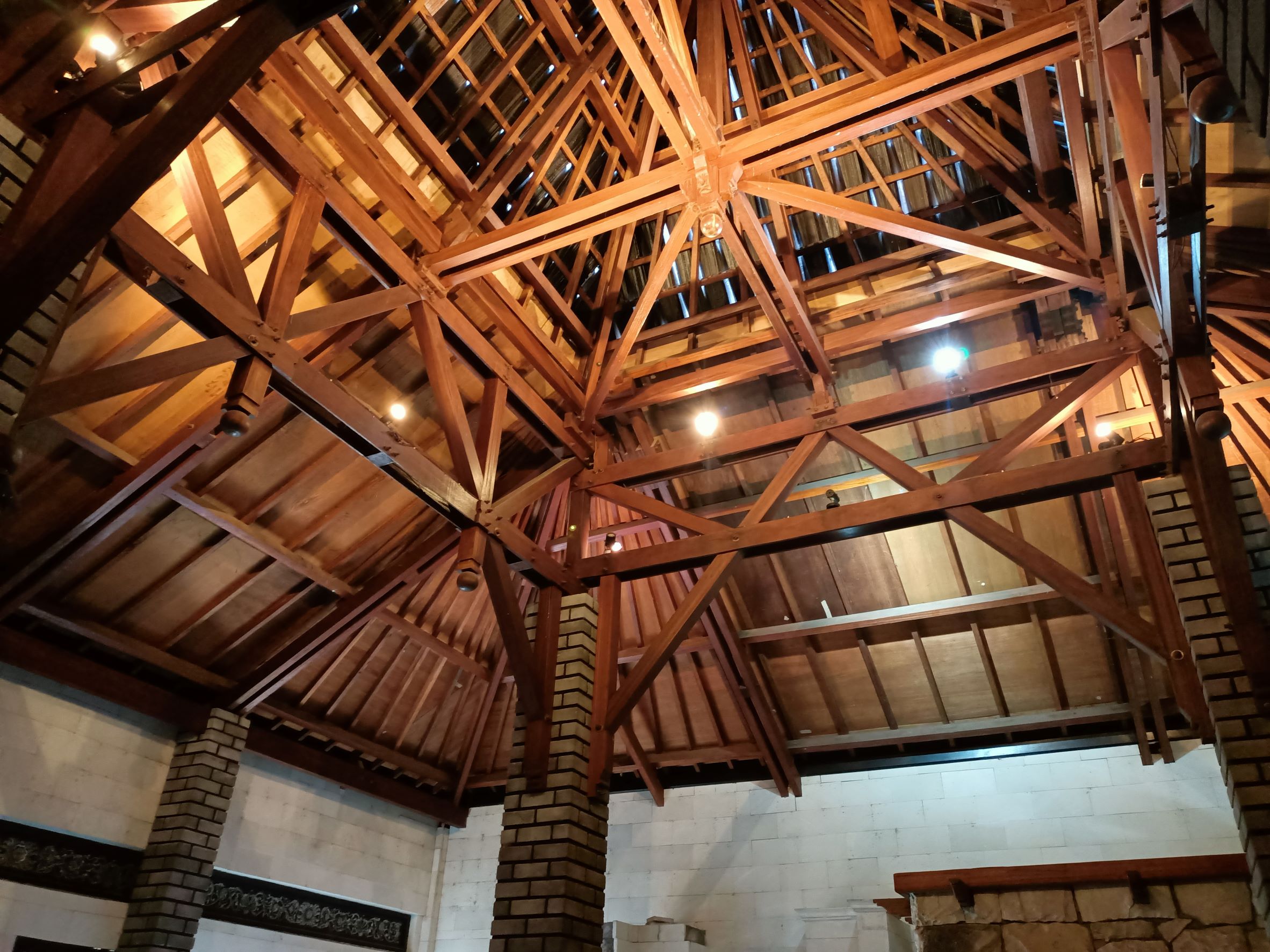
In architecture and structural engineering, a space frame (3-D truss) is a rigid, often lightweight structure arranged in a geometric pattern so that forces are transferred in three dimensions.
Space frames usually utilize multidirectional spans and are often used to achieve long spans with relatively few supports.
We use space-frame structures when the spans between columns are significant. The use of space frames in a building structure can result in considerable savings in construction costs.
The roof structure shown on the right sustained an earthquake with a magnitude of 6.2 on the Richter scale without damage.

Modern wheelchairs provide mobility and independence for people who, for various reasons—including injury, illness, or disability—cannot walk or have difficulty walking. Over the years, wheelchairs have developed from traditional manual models to electric and powered wheelchairs.
Although regulations requiring architects and builders to provide accessibility have become increasingly common, wheelchair access is still not adequately provided in many areas. In many countries, wheelchair accessibility is now a requirement, including features such as sidewalks with ramp access.
Bathrooms, in particular, should be adapted to provide wheelchair access. Common difficulties include transferring between the doorway, toilet, and bathtub. In addition to providing a wider access door, special support rails may need to be installed next to the toilet and bathtub, allowing the user to move safely and independently.
Another issue is wheelchair access outside the house itself. Our prefab houses are normally elevated approximately 50 to 70 cm above natural grade. Wheelchair access can therefore only be achieved if a suitable ramp is provided.
We can add such a ramp. Let us know whether you would like your prefab house to be wheelchair-friendly, and we will design and build it according to your requirements.
. More detailed information < here>
Rainwater harvesting (This feature is no longer available)

Water scarcity is now a global issue. Countries and communities whose primary economic activities depend on a reliable and uninterrupted water supply can face serious difficulties when natural water sources dry up.
Rainwater harvesting is the process of collecting and storing rainwater rather than allowing it to run off. Rainwater can be collected from a roof or other suitable surface and redirected to a tank, cistern, reservoir, or other storage system.
Rainwater harvesting differs from stormwater harvesting in that rainwater is generally collected from roofs, whereas stormwater runoff may be collected from creeks, drains, roads, and other land surfaces.
Rainwater harvesting is one of the simplest and oldest methods of supplying water for households and small residential projects.
Our company can help, advise, and design a rainwater catchment system or rainwater cistern free of charge, if required, when you order a prefab unit from us. For a detailed description, you may visit our Rainwater Harvesting article.
Unfortunately, we had to discontinue this service due to a lack of interest.
(*) Unfortunately we had to discontinue these services due to a lack of interest.
Prefabricating without any nail used
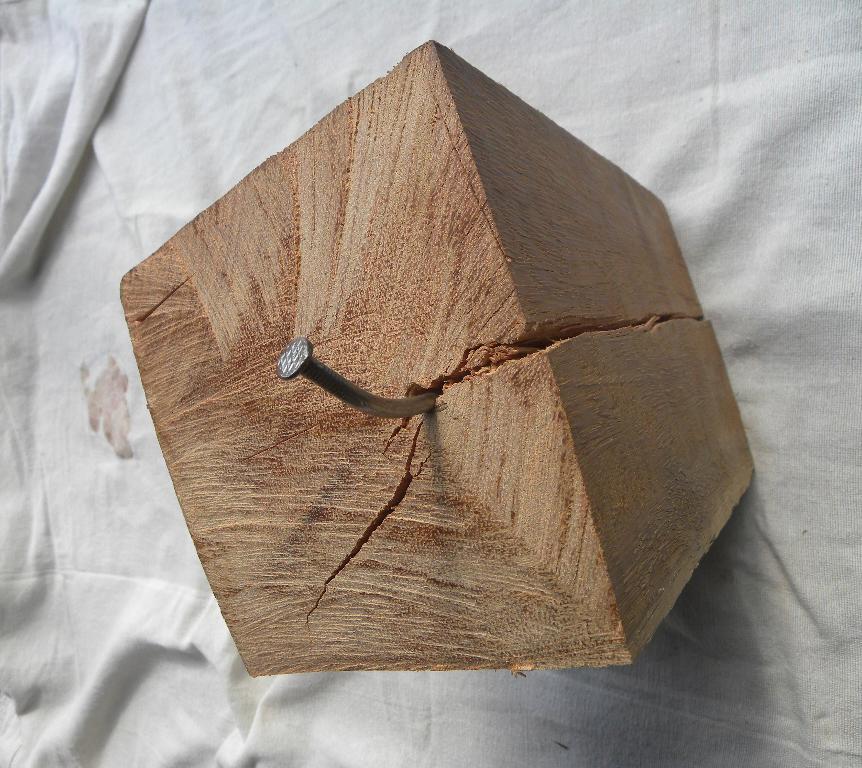
Nails and hardwood are not always an ideal combination. When nails are driven into hardwood, there is a risk of a large crack developing or a piece of timber breaking away at an edge.
In addition, a nail driven into hardwood can become firmly embedded because of the high friction between the nail and the surrounding wood fibres. The resistance to withdrawal can therefore be very high, requiring considerable force to remove the nail.
This raises an important question: What happens when nails are used to connect prefabricated hardwood components that subsequently need to be dismantled?
For this reason, our prefabricated hardwood components are designed without the use of conventional driven nails.
. More details can be read < here >
Designed for easy re-assembling by yourself

There is no need to engage a contractor, as it is straightforward to reassemble our Bali Knockdown Homes at your location.
With only a little DIY experience, you can assemble a prefabricated home supplied by us without driving any nails.
Ask a few friends to lend you a hand—wooden components can be very heavy—and don't forget to ask them to bring a screwdriver.
Our prefabricated houses and structures come with an extensive and detailed three-dimensional re-assembly manual.
The manual uses numbers and colors that correspond to the actual prefab components. Even the direction of North is indicated because, as you know, a column has four sides and only one side faces North.
View an example manual < here >
In-house developed user-friendly interactive price list

In addition to our PDF price list showing our standard prices, we offer an interactive price list.
If you wish to know the prices of all our models, including the different export qualities, additional building options, optional upgrades, and shipping costs, the INTERACTIVE PRICE LIST is the tool to use.
Our interactive price list is a unique tool painstakingly developed by our engineers and, to our knowledge, is not available from any other wooden prefab-house supplier in Indonesia.
With our Prefabworld Bali International interactive price list, you can review the prices of more than 100 models in our four export qualities, with or without selected upgrades. You can also obtain prices for the model skeleton only, shipping costs, and many other options, all within just a few clicks.
On average, 5 to 10 minutes are sufficient to obtain a complete price for a model based on your selected options and requirements, such as:
- cyclone upgrades;
- stainless-steel fixture upgrades;
- complete termite-resistance upgrades;
- with or without roof decking;
- with or without a kitchen; and
- many other options.
We can't make it easier for you.
The interactive price list is programmed in Excel and can calculate thousands of different prices—39,000, to be precise.
If you need assistance with the filling-in process, you can download the user's manual through a link provided on the interactive price list.
Learn more < here >. Browse through the list of available options and try out an example.
