WOOD PROTECTION AGAINST TERMITES, BORERS AND FUNGI

FOR THOSE WHO WANT TO KNOW IN DETAIL ABOUT WOOD DAMAGE, TERMITE ATTACKS, PESTS AND HOW TO PROTECT.
TROPICAL HARDWOOD AND THE PROTECTION OF YOUR PREFABRICATED WOODEN HOUSE
This page is divided into 3 sections: (Click on the yellow link to be navigated to your preferred section)
PART A: TERMITES
PART B: BORERS
PART C: FUNGI
Our objective is not to make an unrealistic promise, by saying "your house is termite resistant by using tropical hardwood", but to give your wooden house the highest practical level of protection against termites that can reasonably be achieved. That is our approach to building wooden prefab houses.
Understanding the risk
Termites in general
Why "white ants" is the wrong name
Is any wood 100% termite proof?
Heartwood versus sapwood
Indonesian tropical hardwood
Why mixing heartwood and sapwood matters
Our approach to termite protection
Current hardwood availability in Indonesia
We do not substitute quality for availability
How we verify our timber
Natural termite resistance is only one part of the solution
Additional protection below the floor
Anti-termite application, termite barriers and baiting systems
What does the research say about Bangkirai and Merbau?
What does naturally durable heartwood mean for your house
Termite galleries and mud tubes
Drywood termite droppings
A real-world example
Nothing lasts forever
Wood damaging pests other than caused by termites
Trivia
Our conclusion
There are approximately 2,600 known species of termites worldwide. Although not all termites pose the same level of threat to buildings, certain species can cause extensive damage to wooden structures, particularly in tropical and subtropical climates. The risk of termites eating your wooden house is larger than the risk of your house being destroyed by an earthquake or hurricane.
Termites primarily feed on cellulose, which is found in wood and other plant-based materials. However, they can also damage paper, books, insulation and, in some circumstances, materials surrounding plumbing, electrical systems and other building components.
For this reason, termite protection should not be considered an optional extra when constructing a wooden house in a termite-prone environment. It is in fact the core of the durability of your wooden house.
• The common subterranean termites
• Formosan termites
• Drywood termites
• Carpenter ants
• Fkting termites
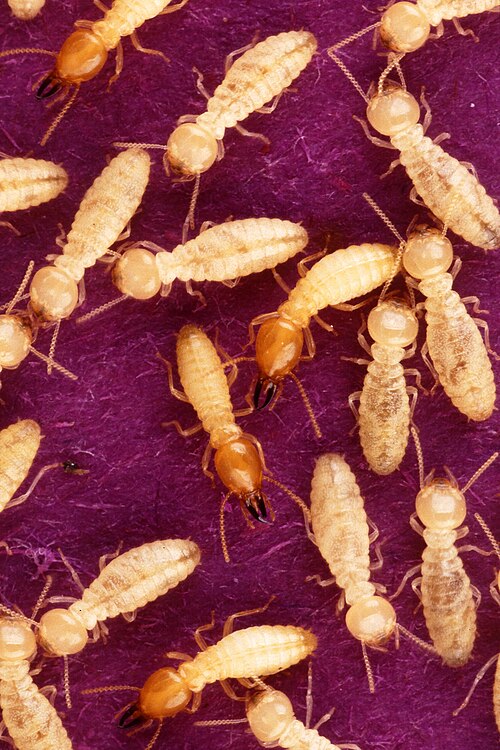
The common subterranean termites live in colonies in or below the ground and gain access to buildings from ground level. They can construct concealed "galleries" to travel from the soil to wooden components above ground. Subterranean termites have a voracious appetite and can cause significant damage to wooden structures, including your home. Once a colony becomes established, these relentless pests can chew through wood to create more tunnels and feed on the cellulose within it, potentially compromising a building's structural integrity.
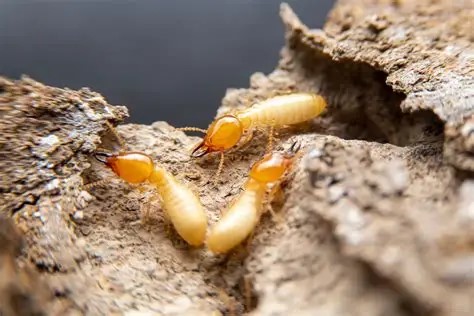 The Formosan termite is often nicknamed the super-termite because of its destructive habits due to the large size of its colonies and its ability to consume wood at a rapid rate. A mature Formosan colony can consume as much as 13 ounces of wood a day (about 400 g) and can severely damage a structure in as little as three months. Formosan termites infest a wide variety of structures (including boatss and high- rise condominiums) and can damage trees.
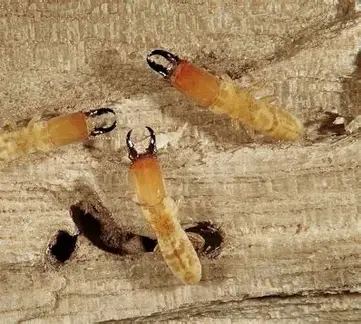 Drywood termites behave differently. Unlike subterranean termites, they can establish colonies directly inside dry timber and may therefore be found in roof structures, ceilings and other wooden components. Inside dry and undecayed wood. No soil contact is needed for this species. They can infest furniture, framing, and even decorative items. They do not build mud tubes.
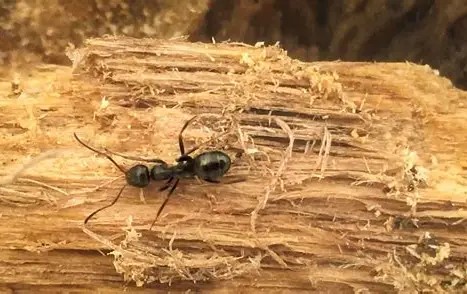 True carpenter ants build nests inside wood, consisting of galleries chewed out with their mandibles or jaws, preferably in dead, damp wood. However, unlike termites, they do not consume wood, but instead discard a material that resembles sawdust outside their nest. Sometimes, carpenter ants hollow out sections of trees. They also commonly infest wooden buildings and structures, causing a widespread problem: they are a major cause of structural damage.
 Flying termites are usually reproductive males and females leaving an established colony in a process known as swarming. Swarming is often associated with warm, humid conditions and rainfall.
After their mating flights, the reproductive termites shed their wings and attempt to establish new colonies.
Consequently, finding flying termites or discarded wings inside or around a house should never simply be ignored. It may indicate the presence of an established colony nearby or a potential route of termite entry.
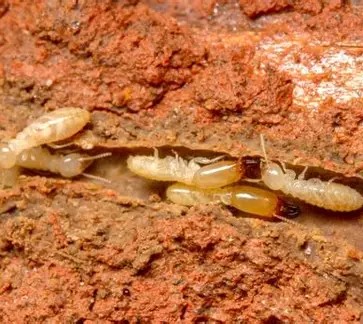
Termitest at work

Termite queen (actual size)
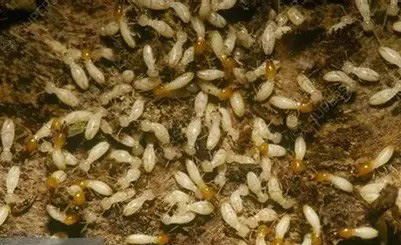
Swarming termites having dinner
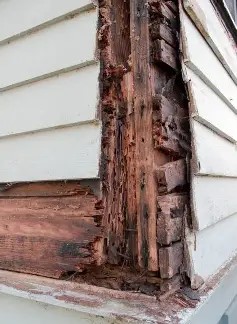
Siiding damage
_______________________________________
WHY "WHITE ANTS" IS THE WRONG NAME
Termites are sometimes incorrectly called "white ants."
This is misleading because termites are not ants. They belong to a completely different insect group and are more closely related to cockroaches than to ants.
The distinction is important because termites have very different behaviour and require different methods of detection and control.
________________________________________
IS ANY WOOD 100% TERMITE-PROOF?
One of the most common misconceptions about wooden houses is that certain tropical hardwoods are completely immune to termites. This is NOT a claim that we make.
There is an important difference between termite-resistant and termite-proof.
NO natural timber should be regarded as providing an absolute guarantee against termite attack under every possible condition. Even highly durable hardwoods can be affected under exceptional circumstances, particularly when sapwood is present (see next paragraph) or when termites have no alternative food source.
The part of the tree that is particularly important is the heartwood (refer to the sketch below).

Heartwood versus Sapwood
The outer portion of a tree is known as sapwood. The denser inner portion is called heartwood.
In many naturally durable tree species, the heartwood contains natural extractives, oils and other characteristics that make it considerably more resistant to insects and decay than the sapwood.
This distinction is particularly important when selecting timber for termite-prone areas.
Research conducted at the University of Hawaiʻi evaluated Indonesian Bangkirai and Merbau heartwood against the most dangerous Formosan subterranean termites. The researchers found both species to be highly deterrent to termite feeding, with performance comparable to some preservative-treated wood. Importantly, the study emphasized that the naturally durable portion is the heartwood rather than the sapwood.
This is why we place such importance on selecting dense heartwood for our construction.
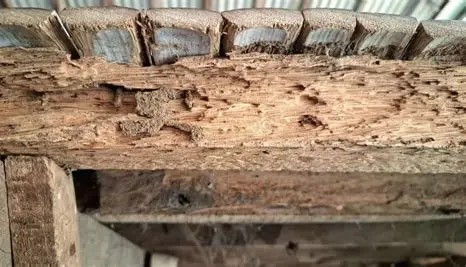
A main support beam from mixed hardwood eaten by termites

Termites having devoured sapwood (the outer ring of the tree). The core of the tree, - the dense part -, called heartwood is not touched
________________________________________
INDONESIAN TROPICAL HARDWOOD
Indonesia is home to a large number of tropical hardwood species. However, their properties vary considerably.
Among the species traditionally considered for termite-resistant construction are:
• Bangkirai
• Camphor
• Merbau
• Teak
• Ironwood
• Sonokeling
Of these, Bangkirai, Camphor and Merbau are particularly relevant to our prefabricated wooden houses, whereas Bangkirai is mainly used for the structural parts and sections of the house and Camphor for 2nd degree structural parts and is regularly used for doors and windows. Merbau is normally avoided for structural applications and considered a waste as a structural material due to its beauty. It is therefore frequently used for flooring and sidings.
Laboratory research specifically examining Indonesian Bangkirai and Merbau heartwood found both to be resistant to feeding by Formosan subterranean termites.
However, this research should not be interpreted as meaning that a house constructed from these woods is automatically "100% termite-proof."
The distinction between heartwood and sapwood remains critical.
________________________________________
WHY MIXING HEARTWOOD AND SAPWOOD MATTERS
A tree does not consist entirely of heartwood. The outer sapwood is generally less naturally durable than the heartwood and can be considerably more susceptible to termite attack and this creates a practical problem when purchasing commercial timber.
It is not always possible for a timber supplier to provide lumber consisting exclusively of dense heartwood. Depending on the dimensions, age and characteristics of the tree, some sapwood may inevitably be present.
Therefore, simply specifying "Bangkirai" or "Merbau" does not automatically mean that every piece of timber supplied is equally resistant to termites. The species is important—but the part of the tree used is equally important.
This is one of the reasons why we pay particular attention to the timber we purchase.
________________________________________
OUR APPROACH TO TERMITE PROTECTION
Our objective is not to tell customers that termites can never attack their house. Our objective is to minimize the risk as far as reasonably possible through a combination of appropriate timber selection, construction methods, preventive treatment and monitoring.
Where termite resistance is a priority, we select the densest and most suitable heartwood available from our suppliers.
We also take additional precautions during the construction process to reduce the opportunity for termites to reach vulnerable wooden components.
Our approach is based on several layers of protection rather than relying on timber species alone.
________________________________________
CURRENT HARDWOOD AVAILABILITY IN INDONESIA
The availability of certain high-quality Indonesian hardwoods has become increasingly challenging.
Bangkirai and Camphor wood are among the species we traditionally use as standard materials for our prefabricated wooden houses, and obtaining suitable quality and quantities can currently be difficult.
Our regular suppliers have informed us (September 2026) that their stocks are currently extremely limited, and prices have increased significantly.
As a result, timber quotations are increasingly subject to short validity periods because availability and pricing can change rapidly.
This situation presents a challenge, but it does not change our quality standards.
________________________________________
WE DO NOT SUBSTITUTE QUALITY FOR AVAILABILITY
When a particular timber becomes difficult to obtain, there is always a temptation to replace it with a cheaper or more readily available alternative. That is not our approach.
We do not simply substitute our standard hardwoods with an inferior species in order to overcome a temporary shortage.
Instead, we carefully inspect and select the timber available to us.
This is particularly important because some species can visually resemble Bangkirai or Camphor while having significantly different physical properties.
For example, the wood species Masupang can resemble certain higher-quality hardwoods in appearance but is considerably less suitable for our construction requirements.
For this reason, timber selection and inspection remain an important part of our purchasing process.
________________________________________
HOW WE VERIFY OUR TIMBER
We personally inspect the timber we purchase from our suppliers.
Among other characteristics, we pay particular attention to the hardness and density of the timber.
Where appropriate, we use our Jangka meter to assist in assessing the hardness of the material supplied to us.
Our objective is simple: We want to know what we are buying before that timber becomes part of your house.
________________________________________
NATURAL TERMITE RESISTANCE IS ONLY ONE PART OF THE SOLUTION
Even the most naturally durable hardwood should not be considered the only line of defence against termites.
A wooden building in a tropical environment should ideally be protected through several complementary measures.
These can include:
1. Selection of naturally durable heartwood.
2. Careful construction detailing.
3. Reduction of direct contact between vulnerable timber and soil.
4. Appropriate protective treatment.
5. Termite barriers where appropriate.
6. Regular inspection and monitoring.
7. Professional termite-control or baiting systems where appropriate.
This layered approach provides considerably greater protection than relying solely on the natural properties of the timber.
________________________________________
ADDITIONAL PROTECTION BELOW THE FLOOR
We recommend paying particular attention to timber located below the flooring. Where appropriate, a suitable protective coating can be applied to timber components below the floor and to the underside of the flooring itself.
These areas are particularly important because they can be difficult to inspect once the house has been completed.
Preventive protection is therefore considerably preferable to discovering a termite problem after significant damage has occurred.
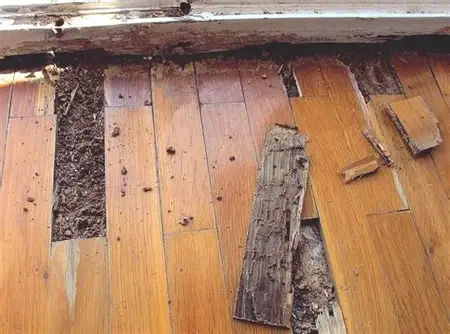
Termite damage where termites have eaten the bottom of the unprotected flooring boards.
________________________________________
ANTI-TERMITE APPLICATION, TERMITE BARRIERS AND BAITING SYSTEMS
Though our aim is using as much as possible termite resistant heartwood, the possibility that some sapwood may pass the test is inevitable. We therefore apply the weak-line-defence mechanism by adding an extra anti-termite application to all wood parts close to natural grade (main flooring beams, joists, pedestals, the below flooring column parts) + the undersides of the flooring boards as a first line of defence.
A termite barrier should not necessarily be regarded as a method of eliminating termites. Depending on the type of system used, its principal function may be to prevent or reveal termite movement and provide an opportunity for early detection.
For properties in areas with significant termite pressure, a professional termite baiting or monitoring system may also be appropriate as an add-on.
A reputable local pest-control company can assess the property and recommend a system based on the local termite species, soil conditions, building design and level of risk.
Termite barriers

Termite barrier
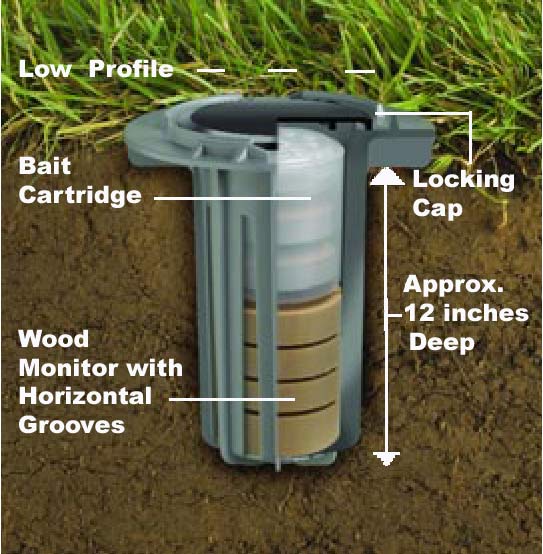
Termite bait station
Termimesh
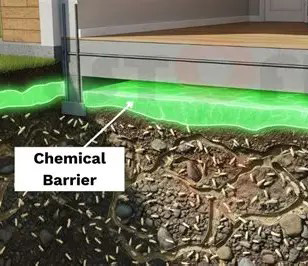
Chemical barrier
________________________________________
WHAT DOES THE RESEARCH SAY ABOUT BANGKIRAI AND MERBAU?
Research by J. Kenneth Grace and Carrie H. M. Tome at the University of Hawaiʻi examined Indonesian Bangkirai (Shorea laevis) and Merbau (Intsia palembanica) against the Formosan subterranean termite.
The laboratory experiments compared the two Indonesian hardwoods with a susceptible control timber.
The results were highly favourable for both Bangkirai and Merbau heartwood. The researchers described both species as extremely deterrent to termites and found that their performance compared favourably with preservative-treated wood.
However, the researchers also made an important qualification: naturally durable timber should be specified as heartwood, because sapwood does not provide the same level of natural durability.
Our company also experimented with 2 Bangkirai hardwood samples, viz; one sapwood sample and one heartwood sample close to a nest of termites for a perios of 2 months. The concolusion was obvious: Termites eat sapwood and avoid eating heartwood (in this case Bangkirai was tested, but is equally valid for other hardwoods). See pictures below.
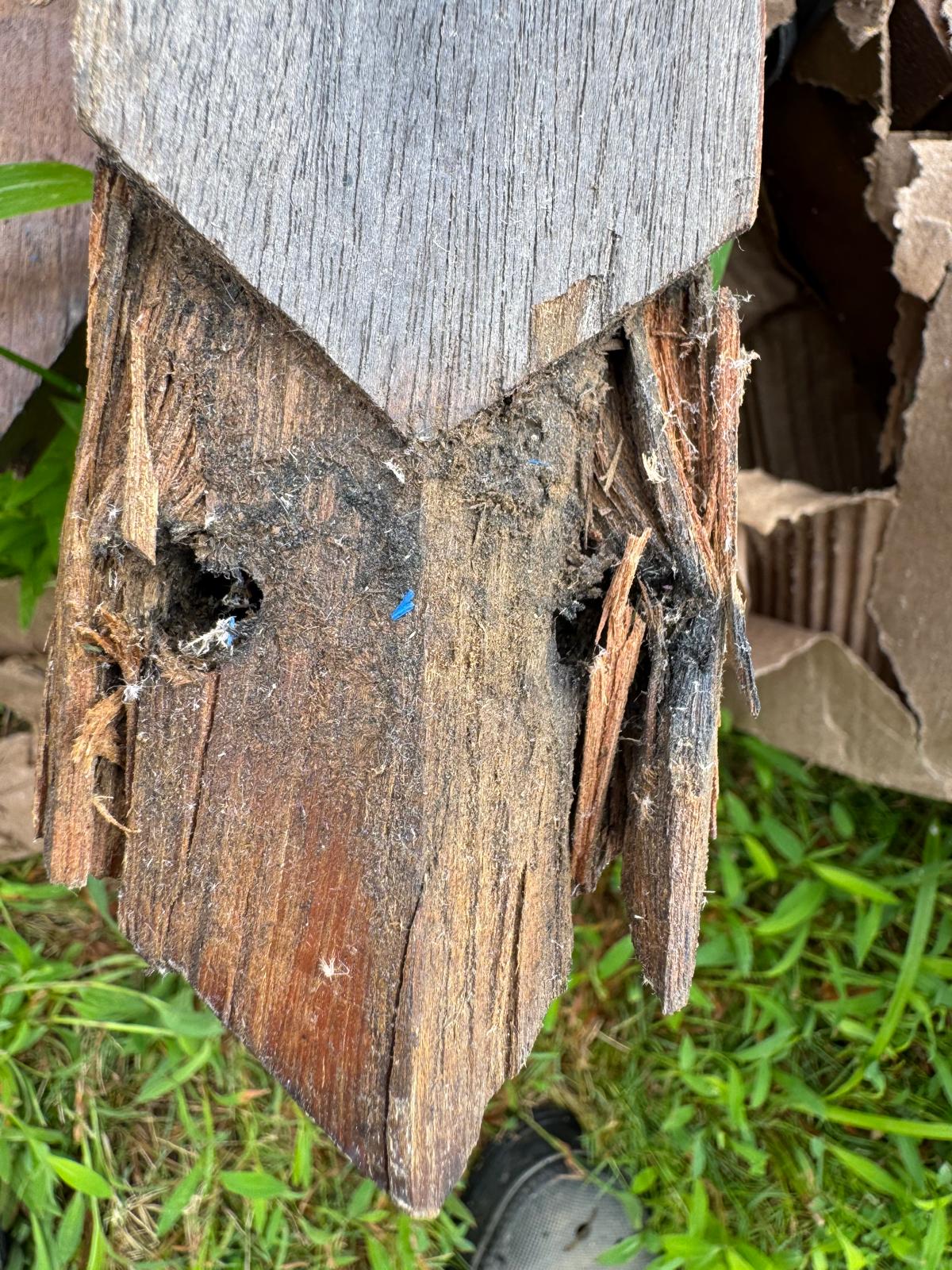
A 140 x 140 mm beam eaten by termites in just 2 months
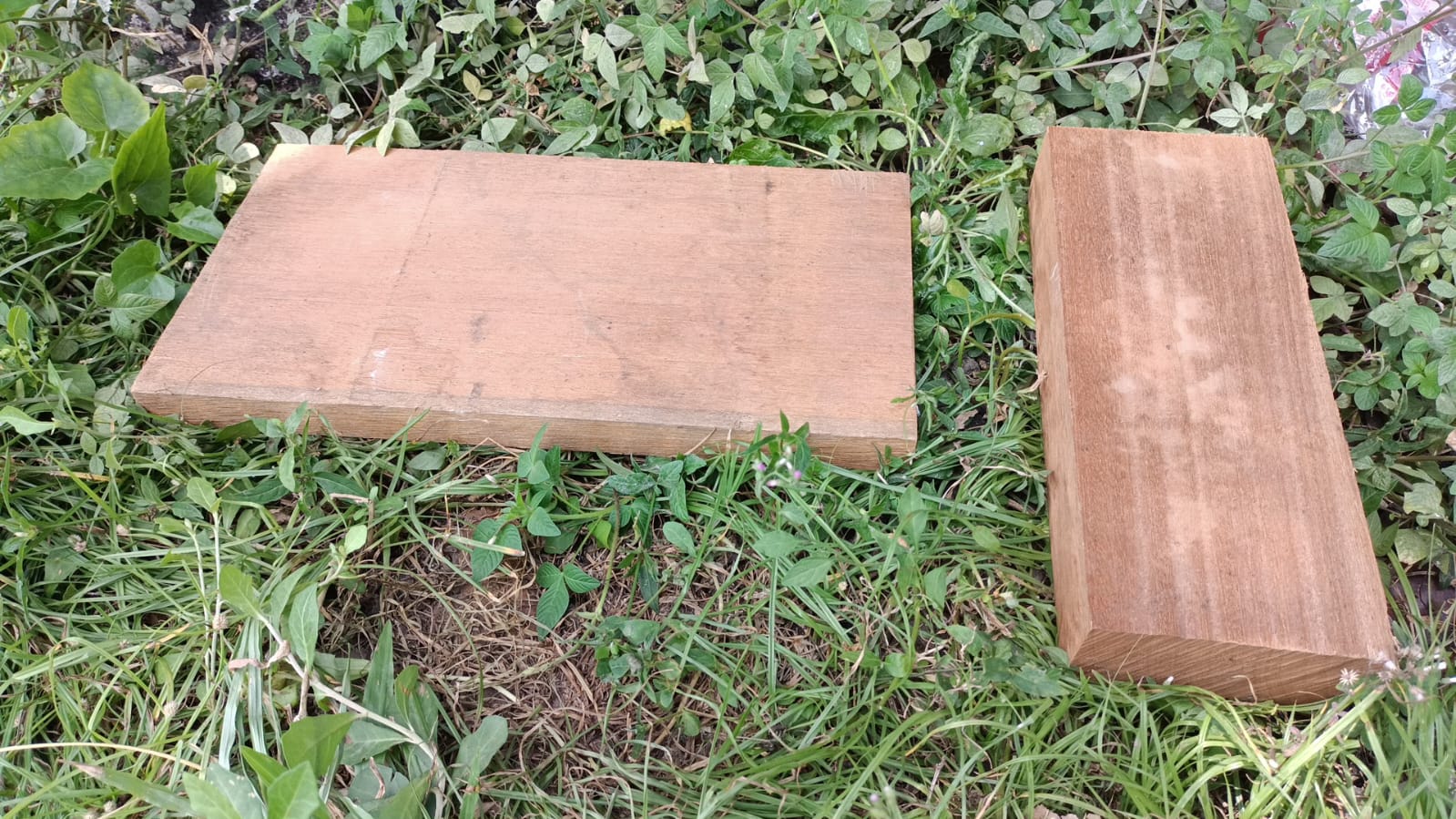
Bangkirai heartwood (a board at the left and a beam at the right, untouched). Tested close to the same termite nest and over the same period of 2 months.
This distinction is fundamental to our own approach of using tropical hardwood.
________________________________________
WHAT NATURALLY DURABLE HEARTWOOD MEAN FOR YOUR HOUSE
When a wooden house is constructed from high-quality, naturally durable heartwood, the inherent resistance of the timber provides an important first line of defence, but we do not believe that timber alone should be relied upon.
Our philosophy is therefore: Good timber + good construction + preventive treatment + monitoring = significantly better termite protection.
This is especially important in tropical regions where subterranean termites are naturally present.
________________________________________
TERMITE GALLERIES AND MUD TUBES
Subterranean termites can construct protected pathways between their colony and their food source.
These pathways are commonly referred to as termite tubes, mud tubes or mud channels.
Inside a wooden structure, termites may also create galleries as they consume or move through the timber.
The presence of mud tubes, unexplained hollow areas in timber, discarded wings or other signs of termite activity should always be investigated.
Early detection can make a substantial difference.

If you see this you have termites

Termite galleries
________________________________________
DRYWOOD TERMITE DROPPINGS
Drywood termites leave behind characteristic fecal pellets, commonly called frass.
These pellets can resemble small grains of sand or sawdust and may accumulate below an infested piece of timber.
If you discover unexplained piles of small pellets in or around your house, they should be investigated to determine whether a drywood termite infestation is present.

________________________________________
A REAL-WORLD EXAMPLE
In 2007, we prefabricated a unit for the Red Frog Bungalow Resort in Panama.
The requirement was that the structure should be highly protected against termites.
The unit was constructed using our termite-protection approach, including preventive treatment.
To date, we have not received a report of termite attack on the timber of that unit.
However, this example also illustrates another important principle: Termite protection requires maintenance.

The treatment should be renewed at appropriate intervals, and the property should be inspected regularly.
In our experience, maintenance at intervals of approximately two to three years can be an important part of maintaining the effectiveness of a protective treatment, depending on the product used and the local environmental conditions.
________________________________________
NOTHING LASTS FOREVER
There is a simple principle that applies to every building material: Nothing lasts forever without maintenance.
Concrete deteriorates. Steel corrodes. Wood can decay. Paint and protective coatings eventually require renewal.
The objective of good construction is not to pretend that deterioration can be eliminated forever.
The objective is to understand the risks and take appropriate measures to reduce them.
Wooden buildings can have a long service life when the correct timber is selected, construction is carried out properly and appropriate maintenance is performed.
Our experience allows us to adapt our approach to the particular conditions of the location where your house will be built.
Climate, soil conditions, exposure to moisture, local termite species and the design of the building all influence the appropriate protection strategy.
________________________________________
WOOD-DAMAGING PESTS OTHER THAN CAUSED BY TERMITES
Termites are not the only organisms capable of damaging timber. Wood-damaging problems can include:
• Wood-boring beetles
• Fungi and wood decay
Different pests require different forms of prevention and treatment.
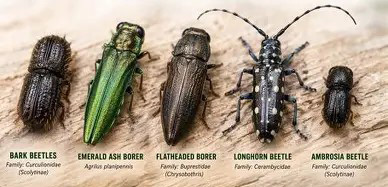
Wood boring beetles
Click < Borers > for detailed pictures
For this reason, identifying the specific local risk is an important part of designing and protecting a wooden building.
TRIVIA
Can termites eat through concrete?
No. Termites cannot eat through concrete.
However, concrete can crack as a building settles, and gaps can sometimes form around plumbing penetrations and other construction details.
These small openings may provide termites with access to parts of a building that would otherwise be inaccessible.
Termites can exploit surprisingly small gaps, which is why proper construction detailing and inspection are important.
________________________________________
Can termites eat through steel?
No. Termites do not eat steel.
Steel itself is not a food source for termites.
However, steel components may form part of a building assembly containing materials that termites can attack. Corrosion or gaps around steel components can also create pathways through which termites may eventually reach vulnerable timber.
For this reason, steel should not be regarded as a complete termite-control system by itself.
________________________________________
Can termites damage electrical cables?
Termites have been reported to damage various non-wood materials and may attack materials surrounding cables or other building components.
Electrical, telephone and data cabling should therefore be properly installed and protected, particularly where cables pass through areas susceptible to termite activity.
Where appropriate, physical barriers and protective cable jackets can provide an additional level of protection.
________________________________________
OUR CONCLUSION
A wooden house does not have to be a house that is vulnerable to termites, however, termite protection should never be based on a single claim that a particular species of wood is "100% termite-proof."
The most important considerations are:
• The right timber,
• The right part of the timber,
• The right construction methods,
• The right additional preventive protection.
Bangkirai and Merbau heartwood have demonstrated very high resistance to termite feeding in laboratory research involving Formosan subterranean termites, but the distinction between heartwood and sapwood is critical.
This is why we do not simply tell our customers: "Your house is termite-proof because it is made from Bangkirai or Merbau."
Instead, we take a more responsible approach.
We select the best timber available to us, pay particular attention to heartwood, apply appropriate preventive measures and recommend regular inspection and maintenance.
Our objective is not to make an unrealistic promise, but to give your wooden house the highest practical level of protection against termites that can reasonably be achieved. That is our approach to building wooden houses in the tropics.
Woodboring beetles most often attack dying or dead trees. In forest settings, they are important in the turnover of trees by culling weak trees, thus allowing new growth to occur. They are also important as primary decomposers of trees within forest systems, allowing for the recycling of nutrients locked away in the relatively decay-resilient woody material of trees. Though the vast majority of woodboring beetles are ecologically important and economically benign, some species can become economic pests by attacking relatively healthy trees (e.g. Asian longhorned beetle, emerald ash borer) or by infesting downed trees in lumber yards. Species such as the Asian longhorned beetle and the emerald ash borer are examples of invasive species that threaten nature forest ecosystems.
BORERS & HARDWOOD
Borers that may attack dry hardwood are:
Lyctid borer (Powder post borer)
These borers produce a very fine powdery dust, similar in consistency to talc attacks the sapwood of certain hardwood timbers causing serious structural weakening in timber that has a high sapwood content.
Anobiid borer
These borers produce a gritty 'salt-like' dust. There are many different species of this borer, but two significant ones are listed - Anobium punctatum, the common furniture beetle, and Calymmaderus incisus, the Queensland pine beetle.
Anobium punctatum (Common furniture beetle)
These borers attack furniture, structural timbers, flooring, and decorative woodwork. Prefer old, well-seasoned timber, sap woods
Bark beetle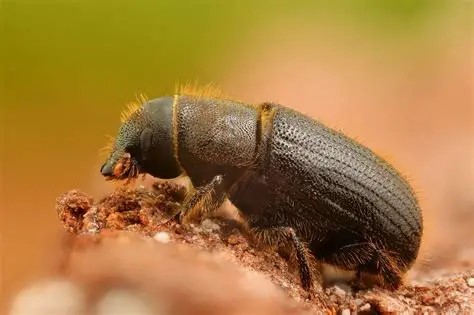
Does not attack tropical hardwood
Emerald ash borer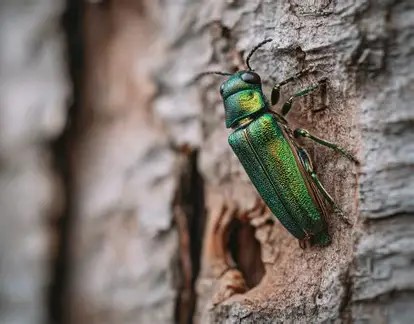
Only attacks ash trees of which the wood is not used for wooden prefab house building
Flatheaded borer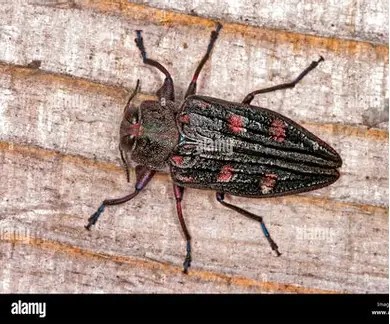
Flatheaded hardwood borers primarily attack stressed or dying hardwood trees. Flatheaded hardwood borers are generally not a threat to healthy forest populations, but they can cause significant economic damage in nurseries,
Longhorn beetle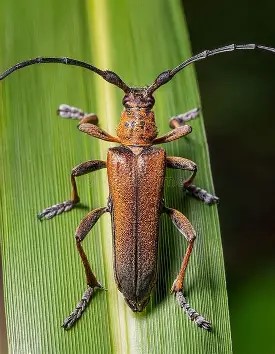
Some invasive species, such as the Asian longhorned beetle, pose a serious threat to forests and urban trees because they attack healthy hardwood trees. Managing these invasive populations is important to protect natural ecosystems and prevent economic losses.
For homeowners, the main concern is the potential damage to ornamental trees, landscaping plants, and wooden materials.
Ambrosia beetle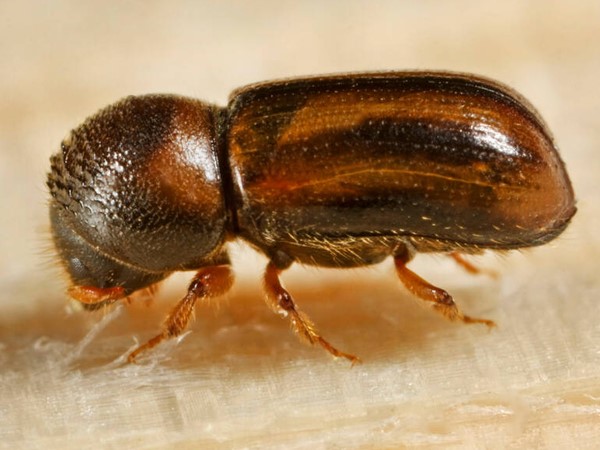
The vast majority of ambrosia beetles colonize dead trees, and have minor or no economic effect. A few species are able to attack live and healthy trees, and those can reach epidemic proportions in non-native, invaded regions.
Beetle species that readily colonize lumber, such as sawlogs, green lumber, often cause region-specific economic loss from the pinhole and stained-wood defects caused by their brood galleries. The ambrosia beetle does not attack hardwood that we use for our wooden houses
Woodboring beetles most often attack dying or dead trees. In forest settings, they are important in the turnover of trees by culling weak trees, thus allowing new growth to occur. They are also important as primary decomposers of trees within forest systems, allowing for the recycling of nutrients locked away in the relatively decay-resilient woody material of trees. Though the vast majority of woodboring beetles are ecologically important and economically benign, some species can become economic pests by attacking relatively healthy trees (e.g. Asian longhorned beetle, emerald ash borer) or by infesting downed trees in lumber yards. Species such as the Asian longhorned beetle and the emerald ash borer are examples of invasive species that threaten nature forest ecosystems.
 If you see dust like this you have borers
 Typical borer holes
A wood-destroying fungus (fungi, plural) causes more damage to structures than all the fires, floods, and termites combined! The wood-decaying fungus requires four fundamentals to survive, which are oxygen, favorable temperatures, water, and food. The fungus occurs generally when the moisture content of wood exceeds 20 to 30 percent, coupled with optimal temperatures (32˚ or 90˚ F), an adequate supply of oxygen, and a suitable source of energy and nutrients. Fungus is a plant that lacks chlorophyll (which gives a leaf its green color). Unable to manufacture its food, it feeds off of cells in the wood. The fungus secretes enzymes that break down the wood into usable food. Fungi will significantly reduce the strength of the wood if the condition continues over some time. The fungus may seem harmless as it breaks down dead trees, but you don’t want it in your house. If you find fungus in your house, you need to take action to prevent damage to your home and health.
FUNGI & HARDWOOD (and your health)
White rot


 White rot breaks down all major wood components (cellulose, hemicellulose, and lignin) more or less simultaneously, and commonly causes rotted wood to feel moist, soft and spongy, or stringy and to appear white bleached. The strength of the infested wood decreases gradually until it becomes spongy to the touch and stringy when broken.
Bangkirai = XXX , Merbau = XXXX , Camphor = XX, kempas = XX , Nyatoh = X , Coconut wood = XX
Brown rot

Brown rot primarily decays the cellulose and hemicelluloses in wood, leaving a brown residue of lignin, the substance which holds the cells together. Wood affected by brown rot is usually dry and fragile and readily crumbles into cubes because of longitudinal and transverse cracks (tending to crack across the grain). Infected wood may be greatly weakened, even before any external evidence of decay can be seen. Brown rot is generally more serious than white rot. Old infestations of brown rot which have dried out will turn to powder when crushed. They are often labeled as "dry rot." This common term is deceiving because dry wood will not rot! Wood kept dry will never decay.
Bangkirai = XXX , Merbau = XXXX , Camphor = XX, kempas = XX , Nyatoh = X , Coconut wood = XX
Poria incrassata (also a brown rot species)
Poria incrassata is a brown rot fungus. Whereas most wood-decaying fungi must rely on a water leak, or ground contact condition, to obtain the required water, poria incrassata has developed specialized root-like water-conducting tubes, called rhizomorphs, which allow it to transport water from the soil to the wood. Therefore, even in situations where wood is protected from rainfall, and no leaks exist, wood can still be decayed by poria. Once established, it can quickly spread through a building and destroy large areas of flooring and walls in as little as a year or two.
Bangkirai = XXXX , Merbau = XXXX , Camphor = XXX, kempas = XX , Nyatoh = XX , Coconut wood = XX
Soft rot fungi

Soft rot fungi degrade only the cellulose and hemi celluloses and typically occur in wood of high water content and high nitrogen content. Soft rot fungi look like brown rot. They are most commonly found in rotting window frames, wet floorboards, fence posts, etc., where nitrogen is recruited from soil or atmospheric contamination. Some of these fungi are common decomposers of cellulose in soil and they are the least specialized of the wood-decaying fungi
Bangkirai = XXXX , Merbau = XXXX , Camphor = XXX, kempas = XX , Nyatoh = XX , Coconut wood = XX
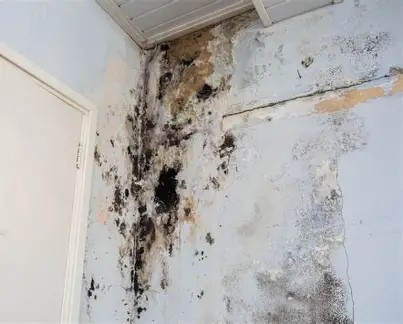
Mold

Molds are microscopic fungi that live on plant or animal matter. The presence of surface molds can be confused with wood-decaying fungi. Although mold organisms may discolor the wood, they do not break down wood fibers and thus do not weaken its structure. However, these organisms could indicate a moisture level in the wood high enough to also support the growth of wood decay fungi. Molds also can increase the capacity of wood to absorb moisture, opening the door for an attack by wood decay fungi. Moisture control methods used to inhibit wood decay fungi will also eliminate conditions favorable for mold to grow. WARNING. Several mold species are toxic, like black mold.
Bangkirai = XXXX , Merbau = XXXX , Camphor = XXX, kempas = XXX , Nyatoh = XXX , Coconut wood = XX
Durability against rot
(when unprotected and in ground contact)
XXXX = Very durable
XXX = Durable
XX = Moderate
X = Non-durable
HEALTH ISSUES CAUSED BY FUNGI AND MOLD
Fungus
Fungus or dry rot is not believed to produce any toxic chemicals or compounds and is therefore not too much of a threat to your health directly, however, a small number of hypersensitivity cases to the fungus have been reported.
More pressingly, the presence of dry rot in your home indicates high levels of dampness and condensation, which can cause respiratory problems and make underlying conditions, such as asthma, worse. Furthermore, dry rot eats through your timbers, causing them to weaken and eventually collapse - this can cause serious health and safety concerns.
What will be the remedy if I have fungus in my house?
♠ Fungus is caused by moisture, hence the first step in treating fungus is to get rid of moisture. You need to undertake a moisture inspection to find the source of the moisture, whether it is from leaking pipes, leaking roof, sitting water, humidity, etc.
♠ There are fungus treatments that will rid your house of fungus. Contact an expert.
♠ Treatments that strengthen and repair wood can be applied to help wood recover from fungi damage.
♠ If the damage from fungus is too bad, the wood may be beyond repair, and in this case, the wood will need to be replaced.
Mold
Abstract from USA Environmental Protection Agency
Molds are usually not a problem indoors unless mold spores land on a wet spot and begin growing. Molds have the potential to cause health problems. Molds produce allergens (substances that can cause allergic reactions) and irritants. Inhaling or touching mold or mold spores may cause allergic reactions in sensitive individuals. Allergic responses include hay fever-type symptoms, such as sneezing, runny nose, red eyes, and skin rash.
Allergic reactions to mold are common. They can be immediate or delayed. Molds can also cause asthma attacks in people with asthma who are allergic to mold. In addition, mold exposure can irritate the eyes, skin, nose, throat, and lungs of both mold-allergic and non-allergic people. Symptoms other than the allergic and irritant types are not commonly reported as a result of inhaling mold. Research on mold and its health effects is ongoing.
The above does not describe all potential health effects related to mold exposure. For more detailed information consult a health professional, your state or local health department,